
Breakout Trading Strategy: Catch Big Moves Early

What Is a Breakout and Why It Matters
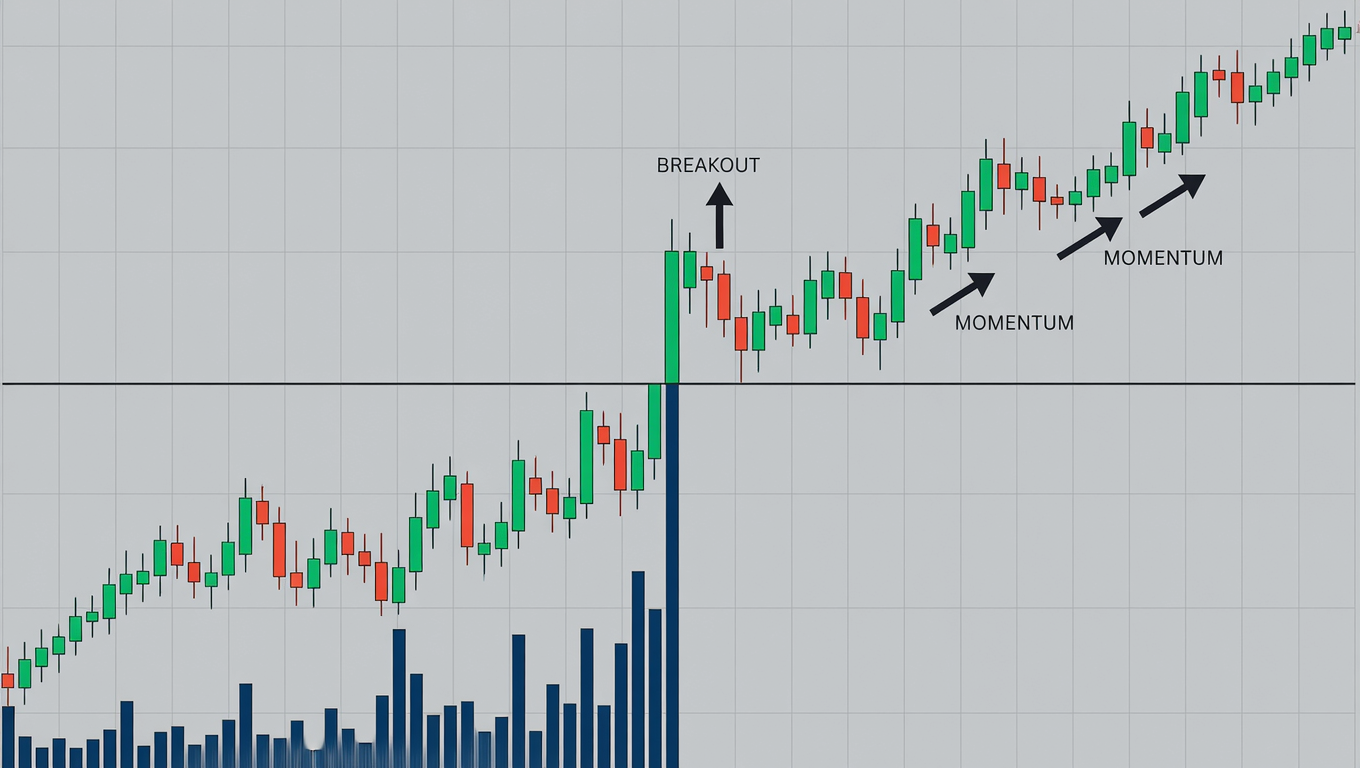
A breakout occurs when price moves decisively through a well-established support or resistance level with increased momentum and conviction. Breakouts are important because they signal that the market has reached a decision point — the forces that were holding price within a range have been overcome, and a new directional move is underway. Breakout trading aims to capture these explosive moves early, entering as price begins a new trend after breaking free from its previous price constraints. When successful, breakouts can produce some of the largest and fastest profits available in forex trading, as the release of pent-up energy often propels price rapidly in the direction of the breakout.
The psychology behind breakouts is compelling. During a consolidation or range-bound period, both buyers and sellers are in a state of equilibrium. As price approaches the upper boundary of the range, sellers enter and buyers take profits, pushing price back down. At the lower boundary, buyers step in and sellers take profits, pushing price back up. This back-and-forth continues until one side gains enough strength to overwhelm the other. When that happens — when buyers finally absorb all selling at resistance, or sellers overwhelm all buying at support — the equilibrium breaks and price moves sharply in the direction of the stronger force. Traders who were waiting on the sidelines see the breakout and join the move, adding fuel to the fire and creating a self-reinforcing cycle of momentum.
Types of Breakouts
- Level breakout — price breaks through a horizontal support or resistance level that has been tested multiple times. The more tests of the level, the more significant the breakout when it finally occurs. A level that has held for weeks or months creates a particularly powerful breakout when breached.
- Trendline breakout — price breaks through a diagonal trendline that has been connecting a series of higher lows (in an uptrend) or lower highs (in a downtrend). Trendline breakouts often signal that the current trend is weakening or reversing, offering an opportunity to trade in the new direction.
- Pattern breakout — price breaks from a recognizable chart pattern such as a triangle (symmetrical, ascending, or descending), flag, pennant, or wedge. These patterns represent consolidation periods within a trend, and the breakout typically continues in the direction of the preceding trend.
- Range breakout — price breaks from a well-defined consolidation range or rectangle pattern. Ranges form when price bounces between clearly identifiable support and resistance levels over an extended period. The longer the range, the more powerful the eventual breakout tends to be.
- News-driven breakout — price breaks sharply following a major economic data release or central bank announcement. These breakouts occur almost instantly and can be the most volatile, often accompanied by wide spreads and slippage. News breakouts require quick decision-making and careful risk management.
How to Identify a Real Breakout vs a False One
Distinguishing genuine breakouts from false breakouts — sometimes called "fakeouts" — is the most critical skill in breakout trading. A genuine breakout typically exhibits several characteristics: price closes beyond the level on a higher timeframe (daily or 4-hour) rather than simply piercing it intraday before reversing; the breakout candle has a strong body with little to no wick at the breakout side, indicating decisive conviction; momentum indicators like RSI or MACD confirm the move by showing acceleration in the direction of the breakout; and volume (or tick volume as a proxy in forex) increases noticeably during the breakout compared to recent average levels. A false breakout, by contrast, typically sees price briefly pierce a level before quickly reversing, with a long wick on the breakout side indicating rejection. False breakouts often occur during low-liquidity periods such as holidays or the Asian session, or just before major news events when traders are hesitant to commit.
Breakout Trading Strategies
There are two main approaches to trading breakouts: aggressive and conservative. The aggressive approach involves entering immediately as price breaks through the level, anticipating that the breakout will gain momentum and continue. This approach captures the largest potential move but also has the highest risk of false breakouts. The conservative approach involves waiting for a retest of the broken level — after the initial breakthrough, price often returns to retest the level from the other side (remember role reversal) before continuing in the breakout direction. Entering on the retest gives you a better price and a tighter stop loss, but you risk missing the trade entirely if price does not retest. Many experienced traders use a hybrid approach: enter a small position on the initial breakout, then add to the position if price successfully retests the broken level.
Managing Breakout Trades
Risk management in breakout trading requires special attention. Place your stop loss inside the previous range or pattern — typically just beyond the opposite side of the breakout level. For example, if you enter long on a breakout above resistance, place your stop loss just below the resistance level (now expected to act as support). As price moves in your favor, trail your stop loss using recent swing lows to protect profits while giving the move room to develop. Target the next major support or resistance level, or use a trailing stop to capture as much of the trend as possible. Accept that not all breakouts will succeed — false breakouts are an inherent part of this strategy. The key is to keep losses on false breakouts small and let your winners run when genuine breakouts develop into strong trends.
Common Breakout Trading Mistakes
The most common mistake is chasing a breakout that has already run too far. By the time you see a strong candle breaking through a level and decide to enter, the best entry may already be past. Patience is essential — wait for the breakout to develop and consider the retest approach rather than chasing price. Another frequent error is trading breakouts during low-liquidity periods, such as the Asian session or just before major news events, when false breakouts are more common. Breakout trades during the London-New York overlap have the highest probability of success. Finally, failing to respect role reversal can cause losses — a level that was support before a downside breakout often becomes resistance on subsequent retests, and traders who buy the retest expecting support may be disappointed.
Conclusion
Breakout trading offers the potential to capture large, rapid moves when price breaks through key levels with conviction. Learn to identify genuine breakouts by looking for decisive candle closes, strong momentum, and increased volume. Choose your entry style — aggressive on the initial break or conservative on the retest — based on your risk tolerance and trading personality. Manage your risk with well-placed stop losses inside the previous range, trail stops to protect profits as the move develops, and accept that false breakouts are a normal cost of doing business. Focus on higher timeframe breakouts (daily, 4-hour) for the most reliable signals, trade during high-liquidity sessions, and always combine breakout signals with broader market context. When you master breakout trading, you add a powerful tool to your arsenal that can generate some of your largest and fastest profits.
A passionate writer and content creator.
Community Comments
Please log in to comment on this blog post.
Log InNo comments yet. Be the first to comment!